
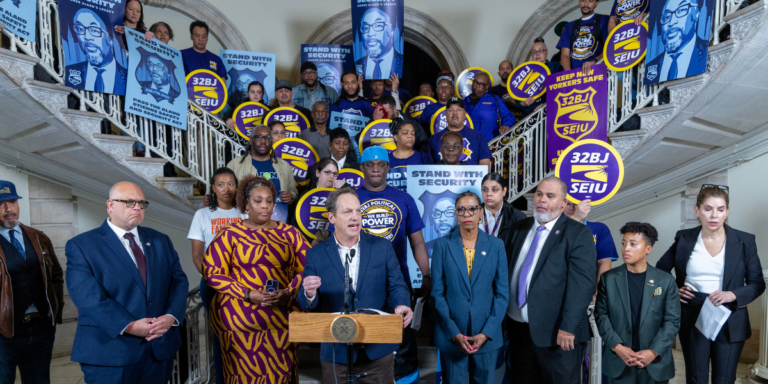
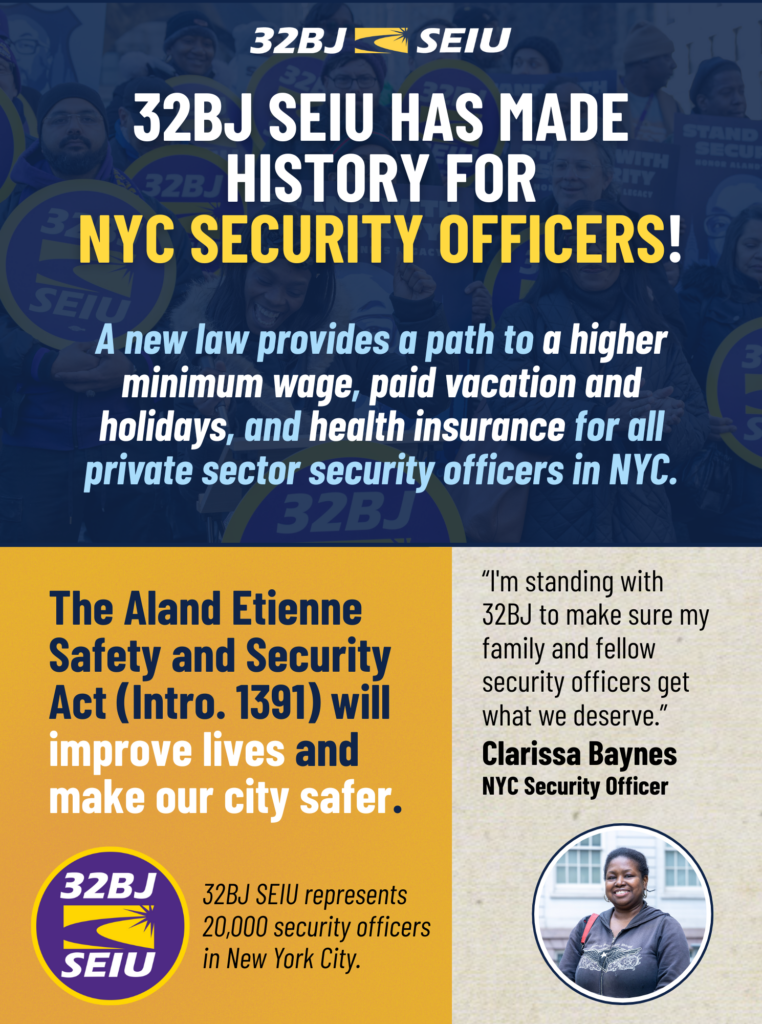
On January 29, 2026, New York City Council enacted the Aland Etienne Safety and Security Act. This historic legislation will help address a turnover crisis plaguing the private security industry, where the average officer makes $40,311 and 37.8% lack health insurance through their employer or the employer of a household member. To stem this crisis, the legislation guarantees wage, benefits, and paid time off standards for private security officers.
The legislation is named for Aland Etienne, the security officer and 32BJ SEIU member who was tragically killed while trying to save lives during the July mass shooting at 345 Park Ave. Etienne’s family has testified in support of the Act, which honors Etienne’s legacy by recognizing and uplifting the frontline workers New York increasingly relies on as first responders, while also bolstering public safety.
What it does:
The legislation guarantees minimum standards for the approximately 60,000 private security officers who are not currently covered by the prevailing wage or comparable standards. It ensures that all private security officers receive at least the same compensation package as private security officers employed on city contracts – a standard that is set annually by the city.
Over the next three years, security officers will see the direct impact of this legislation:
Year 1: Hourly Wage: First, the minimum wage standard will go into effect. Currently, the minimum wage standard is $18.02-$21.20, depending on seniority.
Year 2: Paid Time Off: Next, officers will get paid holidays and vacations. Currently, the minimum standard for an officer with two years’ experience is two weeks of paid vacation and eight paid holidays.
Year 3: Benefits Supplement – Finally, officers will see a benefits supplement. This means employers have to contribute to benefits such as health care, which can be provided in the form of benefits, cash, or a combination of the two.